Note: ‘Emma And Joey’ was formerly known as
‘Beep Beep Nursery Rhymes’
© Happy Pixels - All Rights Reserved


Why Parents and Teachers Love This Song
● Normalizes Big Feelings: It teaches children that emotions like being nervous or sad are natural and manageable.
● Simple Vocabulary: Uses clear, descriptive language (shaking hands, wide eyes, clapping) to connect physical sensations to emotions.
● Social Skills: Encourages positive social interactions, like saying "hello" to overcome fear when meeting new friends.
● Calming Solutions: Provides gentle "fixes" for tough moments, such as seeking a hug or focusing on the fun of playing.
Free Printables Section given below!
How to use this page:
1. Watch & Sing: Play the video and encourage your child to sing along with the "Feelings, feelings everywhere" chorus.
2. Mirror Play: Have your child look in a mirror and try to make the faces Emma makes for "happy," "sad," and "surprised."
3. Discussion: Use the lyrics as a prompt. Ask: "Emma feels nervous meeting new friends. What makes you feel nervous?"
4. Printable Lyrics: Use the text below to practice reading or to follow along during circle time.
Get Creative with Emma!
Download our free activity sheets to help your little one explore their feelings.
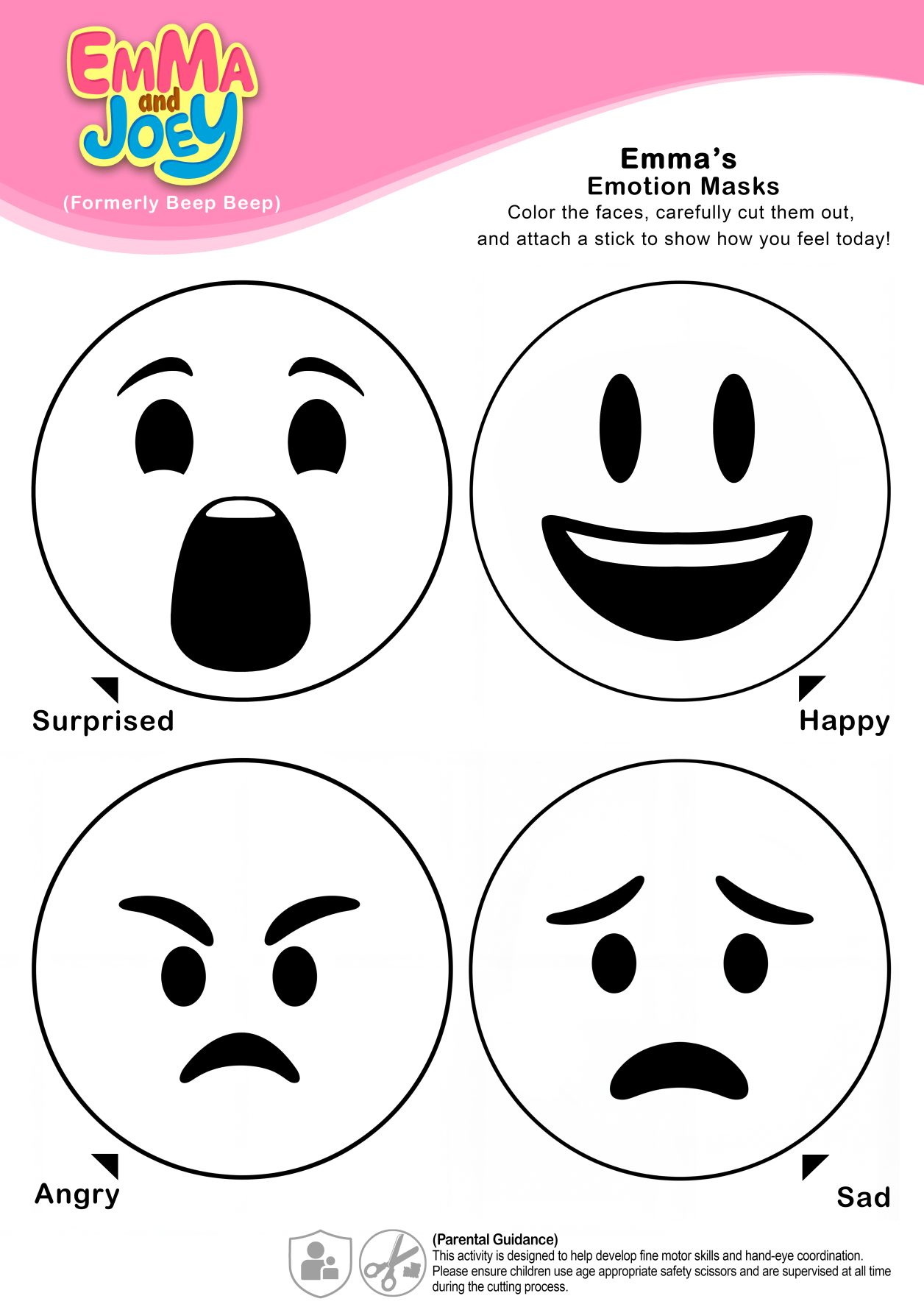
How to Use This Activity:
● Create: Have your child color the faces, then carefully cut them out along the solid lines. Attach a popsicle stick to the bottom tab using glue or tape.
● Play: Play the "Learn Emotions With Emma" video and ask your child to hold up the matching mask whenever Emma sings about feeling happy, sad, nervous, or surprised.
● Roleplay: Use the masks throughout the day. If your child is having a tough time finding their words, ask them to hold up the mask that shows how their tummy or heart is feeling.
Why Parents and Teachers Love It:
● Builds Fine Motor Skills: Coloring within the lines and using safety scissors are excellent ways to strengthen the small muscles in a child’s hands, preparing them for writing.
● Bridges Communication Gaps: For toddlers and preschoolers who are still developing their vocabulary, holding up a visual cue is a stress-free way to communicate big feelings.
● Encourages Active Listening: Waiting for the right emotion in the song teaches focus, patience, and active listening.
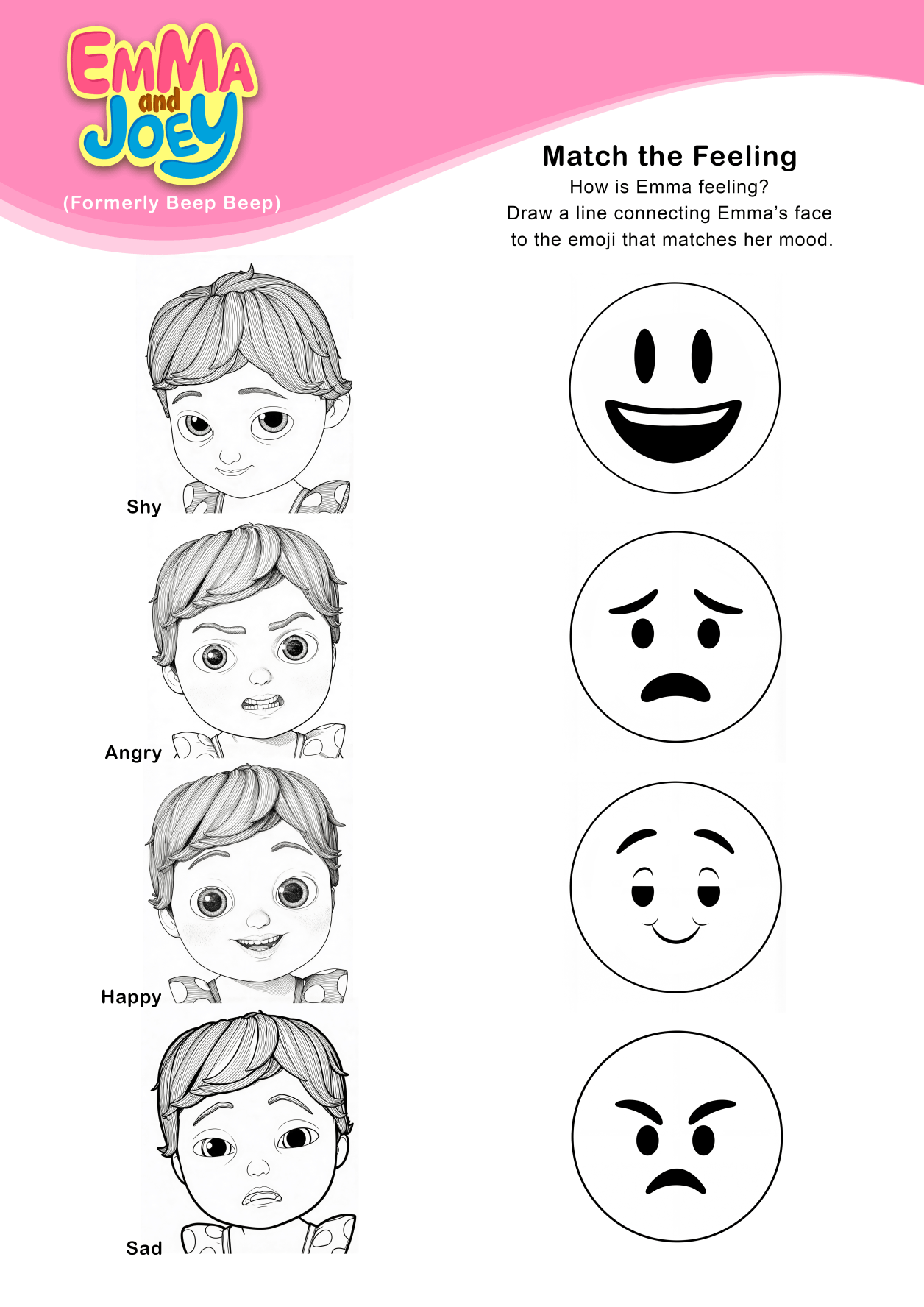
How to Use This Activity:
How to Use This Activity:
● Discuss: Before picking up a pencil, point to Emma's faces on the left. Ask your child, "Look at Emma’s eyebrows and mouth here. How do you think she is feeling?"
● Match: Have your child draw a line connecting Emma’s expressive face to the corresponding yellow emoji on the right.
● Color: Once the matching is done, let them color in Emma's faces to complete the artwork.
Why Parents and Teachers Love It:
● Develops Empathy and Recognition: By analyzing the subtle changes in Emma's eyes and mouth, kids practice reading body language—a vital step in developing empathy for others.
● Boosts Cognitive Logic: Drawing connections between two related but visually distinct items (a human face and an icon) strengthens problem-solving and pattern-recognition skills in early brain development.
● Practices Pencil Control: Drawing a straight line from one side of the page to the other is a fundamental pre-writing skill that enhances hand-eye coordination.